

What a brand says in public has to sustain what it does in private. Signne manages that voice: with the media, with advocates, with the organisation itself and in the moments that allow no improvisation.
Communications and public relations
The voice that sustains what you do.

What are corporate communications?
Corporate communications is the system that governs a company’s public voice: its relationship with the media, its reputation within the industry, its internal discourse. It is not a collection of press releases — it is an architecture of presence.
A brand can do the best work in its category and fail to get anyone relevant to know about it. Or it can go through a transition — a handover, a merger, a new positioning — and not find the words to tell it without sounding like a corporate statement.
Reputation is not built when it is needed. We work on it continuously — with the media, with advocates, with the team itself — so that when the moment that demands it arrives, it is already there.


Moments that demand a clear voice
1
Nobody knows the brand has done something notable
The work is done, but the press, the industry or those who recommend have not found out. Without a relationship built in advance, no press release on its own changes that.
2
A transition that needs to be explained well
A handover, a merger, a change of positioning: the brand has to tell it with judgement and in time, before someone else tells it on its behalf.
3
The team could not explain why they work there
When internal communication is non-existent or inconsistent, it is hard to attract and retain talent — and the brand outwardly starts to sound different from the brand inwardly.
“Reputation is not built when it is needed. It is built before.”
Brands that do notable things and fail to get them known. Or that go through a delicate moment — a transition, a handover, a crisis — and need to tell it with judgement and in time.
We build relationships before press releases. With the media, with advocates, with the brand’s own team. Reputation is worked on continuously: when the moment comes to need it, it is already built.

Relaunch — Hoss Intropia
FASHION · RELAUNCH COMMUNICATION
Relaunch — Hoss Intropia
A return to the market after two years away, with Tendam behind it, required a voice as credible to long-standing customers as to a new audience. The Osborne sisters as ambassadors and the HossLovers Club as its own community sustained coverage in 33 media outlets — “not betting on a conventional communications agency”, in the words of Tendam’s own Marketing Director.

Lip & Cheek Launch — Laboratorios BABÉ
BEAUTY AND DERMOCOSMETICS · LAUNCH COMMUNICATION
Lip & Cheek Launch — Laboratorios BABÉ
Communicating a tinted sunscreen without it sounding like make-up required a message calibrated for press and consumer at the same time. The campaign, built around the “&” symbol, was implemented in 16 countries with 69.6% simultaneous activation among European partners.

Turia Stark Relaunch — Cervezas Turia
BEVERAGES · RELAUNCH COMMUNICATION
Turia Stark Relaunch — Cervezas Turia
Recovering a beer from 1957 needed more than a spot: its own press kit and a narrative that local media could tell as their own. The event of more than 600 people, designed as a bar “de sempre”, closed the coverage with the claim “Nostra. De sempre.”

The Great People — The Great Fusion
BEAUTY AND DERMOCOSMETICS · PUBLIC POSITIONING
The Great People — The Great Fusion
An independent cosmetics brand needed a public discourse that set it apart from the conventional beauty industry. Four artists over 35 — ceramics, marbling, light, textile — turned anti-ageism into the brand’s public stance, not just a product.

STOP AKN — Laboratorios BABÉ
BEAUTY AND DERMOCOSMETICS · PR AND ADVOCACY
STOP AKN — Laboratorios BABÉ
Talking about acne to a young audience without losing the trust of the pharmacy channel required a message that worked for advocates and consumers at the same time. “Don’t pop it, treat it” reached pharmacies and influencers with its own PR and partners in 8 countries, with more than 1.3 million impressions: the brand’s expert discourse, reinforced among those who recommend it.
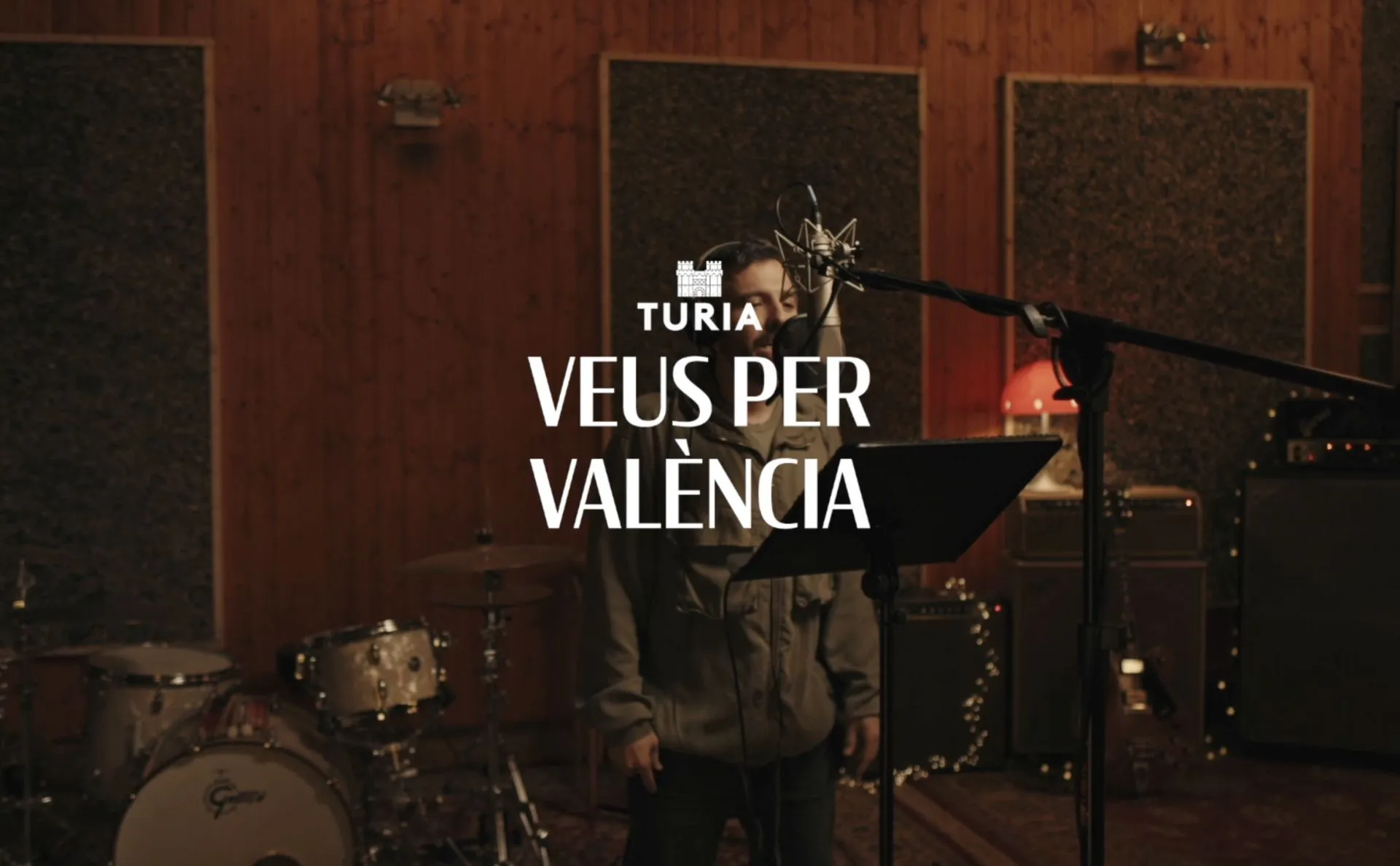
Veus per València — Cervezas Turia
BEVERAGES · REPUTATION AND CULTURAL RESPONSE
Veus per València — Cervezas Turia
After the DANA floods, the brand needed to be present without sounding opportunistic. Bringing together 16 Valencian voices to reinterpret “Lodo” generated more than 5 million organic views and consolidated Turia as a credible voice in the city’s recovery — earned reputation, not bought.
Frequently asked
questions
What is the difference between corporate communications and public relations?
Corporate communications is the framework: all the decisions about how a company speaks in public, inwards and outwards. Public relations is one part of that framework — the one that works specifically on the relationship with media, journalists and advocates to build presence and reputation.
In practice, they do not work well separately. A PR agency that does not understand the brand’s communication strategy executes without judgement. And a communication strategy without real relationships with the media goes nowhere.
What does a press office include and how does it differ from sending press releases?
A well-built press office works on three levels: relationships (which journalists and media are relevant to the brand and how they are cultivated before they are needed), content (what this brand has that is worth telling and how it is structured so that a journalist sees it that way) and follow-up (what comes out, where, what it says, and what the brand does with that coverage).
Sending press releases without all three legs is not a press office — it is noise. We work on a monthly retainer because reputation is not built in a single statement.
Do you work with brands in crisis situations?
We accompany brands in delicate moments — a leadership transition, a public controversy, a change of positioning that needs to be managed with care. We do it from judgement: what to say, when to say it, to whom and in what tone.
We are not a reactive crisis management service with a war room and an on-call team. What we offer is the solidity of having built reputation over time: when a moment arrives that demands it, the foundation is already there.
What is employer branding and when does it make sense to work on it?
Employer branding is the way a company communicates what it is like to work there — inwards, to retain, and outwards, to attract the right talent. It is not a section of the HR website: it is part of the brand’s identity.
It makes sense to work on it when the company is in a growth phase, when it is competing for hard-to-find profiles, or when there is a visible gap between what the brand says it is and what its team experiences. One of the first symptoms is that nobody inside can explain well why they work there.
How do you handle sustainability communication without falling into greenwashing?
With two criteria: say nothing that is not already being done. And tell the process, not just the result.
Greenwashing happens when communication runs ahead of reality. The alternative is not silence — it is calibrating the story to the exact level of real commitment, with the evidence to support it. European regulation (CSRD, the anti-greenwashing directive) is forcing that honesty in markets where a green logo used to be enough. We approach sustainability communication from the same place as everything else: substance first, then story.
What kinds of brands do you do corporate communications for?
The criterion is not the sector — it is that the brand has something real to communicate and the ambition to do it with judgement. We have worked with brands in consumer goods, fashion, hospitality, beauty and gastronomy.
What they have in common: they want their public voice to live up to what they do, and they understand that this requires an ongoing working relationship, not a one-off campaign.